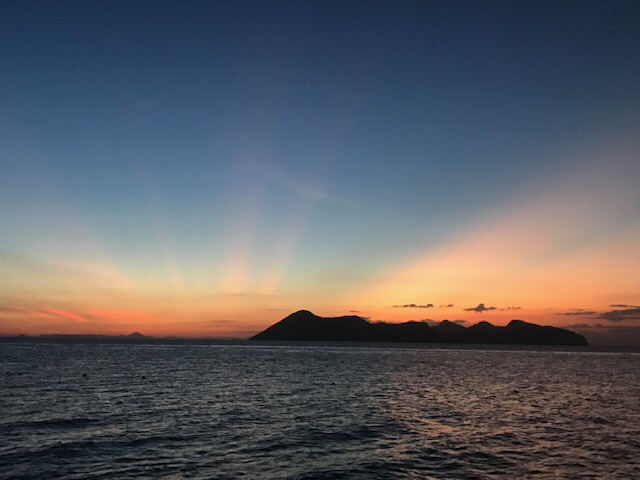
Me vs Nature

Bad things supposedly happen in threes. This week I’m hoping that is true, because I’ve had my third full force attack from nature this morning and I don’t think I can handle another one. My few days of hell are recapped below-

Attack #1: Centipede in my sleep

On my second day here we were presented information about all of the dangerous or harmful species we may encounter on the island, one of them being the centipede. I had heard warnings from other people about keeping your tent closed and secured to ensure a centipede can’t get in, and I thought I was pretty careful about this. Centipede bites are known to be extremely painful and can cause swelling, itching, burning, and nausea. A few nights ago, I awoke around 2:30am for no reason. I’ve been going to sleep listening to music or a podcast most nights, so when I saw something moving, I thought it was my headphone cords. I turned on a flashlight and saw A SIX INCH CENTIPEDE SITTING ON MY CHEST. I quickly grabbed the bedsheet to wrap it up and throw it as far as possible, but when I got out of my tent and shook the sheet out, I never saw the centipede land. I went back in my tent and searched everywhere and wasn’t able to find out, so after about twenty minutes I assumed it must have landed outside. I finally laid back down and no more than thirty seconds later I saw it slither back up the mattress out of the corner of my eye. This time I grabbed it and made sure I saw it land in the trees as far away from me as possible. I think I may have slept a total of thirty minutes the rest of the night.

Attack #2: Triggerfish
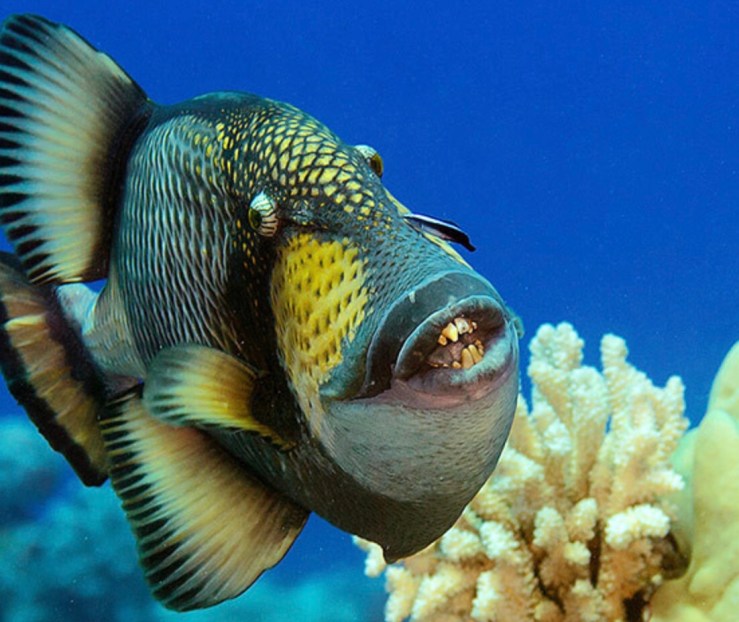
In the same dangerous species presentation I mentioned before, we were also warned about the triggerfish. This large fish can be extremely aggressive in the water, especially when nesting. While diving the other day, I was swimming along close to the bottom looking at some shrimp when I felt a pull on my fins. I turned around and didn’t see anything and assumed another diver had brushed against me, but then I felt it again. I was looking behind me when all of a sudden our dive leader was on top of me flailing her fins and spraying bubbles from her regulator. I was so confused about what was going on, when all of a sudden the bubbles cleared and a massive triggerfish was charging right at us. We kicked our fins and continued spraying bubbles, which would delay the fish a little bit until he turned around for another attack. It soon directed its attention to another diver and made probably seven charges at him. After a few minutes he finally relented, and we were able to swim off in the other direction.

Attack #3: Ant Infestation

In a previous blog I mentioned my newfound reliance on Pringles, as they are one of the only American chip brands available here. I thought they were great because they can be resealed with a lid and enjoyed over a few days, but this morning they betrayed me. I returned to my tent after a morning dive to grab my sunglasses and saw HUNDREDS of tiny ants all over my floor. I had no idea where they were coming from or how they got in, but I quickly discovered that my Pringles can had lost its lid in one of my bags. The ants were all over the floor and in my bag containing all of my toiletries. I spent an hour clearing out every belonging, shaking it out and rinsing it, and sweeping ants up. I thought you were here for me Pringles.

So at this point that’s enough nature for me. Hopefully ya girl can catch a break.
People of Pom Pom: Part One

I’m introducing a new segment to the blog where I feature a person at TRACC. With there being so many cool people here who come from all different backgrounds, I figured some blog features were warranted.

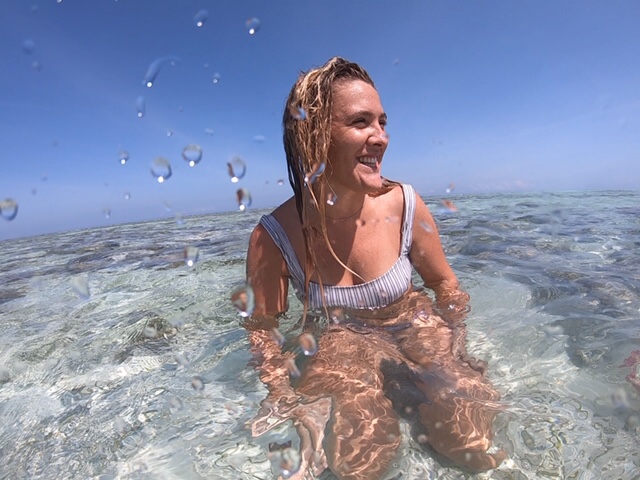
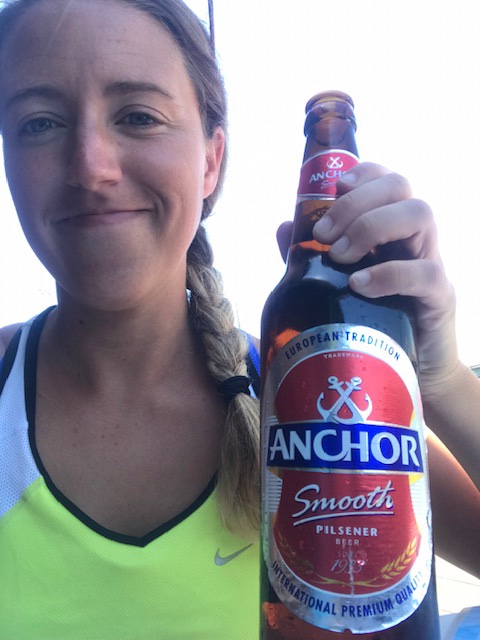
With this first feature, I interviewed my main girl Maddie. Maddie is the A-Level teacher here at TRACC and is responsible for educating all of the fresh minds who arrive at Pom Pom. Aside from teaching, she’s there to run a few laps around the island in the morning and pound some whiskey at midnight while listening to Cardi B.

Name: Maddie

Home Country: Australia

Favorite 3 Places in the World: Australia, Glasgow, Great Barrier Reef

Best Known at TRACC For: being the A-Level teacher and sinking piss (getting drunk in Australian slang)

Journey to TRACC: saw the job on Coral List and applied, had a real patchy interview because of the reception issues but the got the job

Worst Job Ever Done to Afford Travel: honestly can’t think of one because most of my travel was paid for by other people (anyone else thinking sugar daddies?). I’ve had a real cruisey time but also I’ve been working since age nine when I was delivering newspapers. I guess if I had to pick I’d say working in a pharmacy

What’s Next? I’m going to finish my PhD in Australia so that I can get free upgrades on airplanes, marry rich and retire young

And that’s Maddie in a nutshell. More to come on the people of Pom Pom!

ARC Reefs

Aside from diving, a decent amount of my day is spent working on a few of the many projects here at TRACC, the main one being the Artificial Reef Crest. With the destruction of a lot of the natural reef here, TRACC works to find solutions to repair and rebuild what remains and hopefully promote future growth on these existing reefs. To do this, we do ARC reef builds a few times a week, which consists of mixing sand, cement, water, coral fragments, and rock to create cinderblocks, which are planted in the water to provide a foundation for new coral to grow on. With the sea in this area containing a slope that makes it difficult for coral to grow on, the aim of these blocks are to provide a sturdy base for new coral to grow on top of and remain stable over time.

In addition to building and planting these blocks, we are also sent on work dives throughout the week to clean the existing ARC reefs, assist with coral transplants, and maintain the coral nurseries.

The hope is that this work helps to rebuild the coral population in the area, which will in turn attract marine life and promote the growth of that as well. Coral reefs occupy just 0.1% of the seabed, yet they provide for 25% of all marine life (Mulhall, 2009), so their maintenance and growth is critical. Though we are just a small group of people off the coast of a tiny island, even the smallest amount of change can make a difference. In 2018 alone at TRACC, divers spent a total of 138 hours underwater, increased the stable substrate by 48.72m, protected 13% of the reef crest, and planted 245 coral fragments, which lead to increases in both fish and invertebrate populations. Not too shabby 🐡

Video credit to @melle.elle

Semporna

Today I left the island for the first time in over a month to spend the day in Semporna for errands. Semporna is where I was originally picked up by boat upon arrival and is where the camp shopping is done on Mondays and Thursdays. I rode by boat with Mel, a Canadian volunteer, and Robin, who is on camp staff, along with a few of the local staff members.

We arrived around 10am and headed immediately to MayBank for an ATM. In Semporna, credit cards are essentially useless as no businesses accept them other than hotels. Because of this, we arrived at the bank and waited in a thirty person line for the ATM. On top of this, before entering Robin told me to expect to be cut in line, which happened probably 15-20 times. We were seemingly invisible as countless Malaysian people stepped around us and cut our spot in line. The whole process took over half an hour, but at least the bank had air conditioning?

Once we had that cash money we headed to Restoran Bismallah for a late breakfast. The specialty here is roti, which I would dumb down as the Malaysian form of a quesadilla or burrito? Made of flour and water like a thin pancake or tortilla, roti is stuffed with a variety of choice fillings, including egg, veggies, meats, banana, cheese, plain, etc and served with dipping sauces. I got a veggie one served with a mystery spicy sauce that was delicious. I also ordered an apple juice and got something that was definitely not apple juice.

Afterwards we split up to complete errands for the camp, including trips to the pharmacy, grocery store, department stores and fruit markets. Mel and I were stared at and heckled most places we went, being the lone blonde haired blue eyed girls who had no idea where they were going. In the afternoon we found a spot on the water to sit and have a beer.

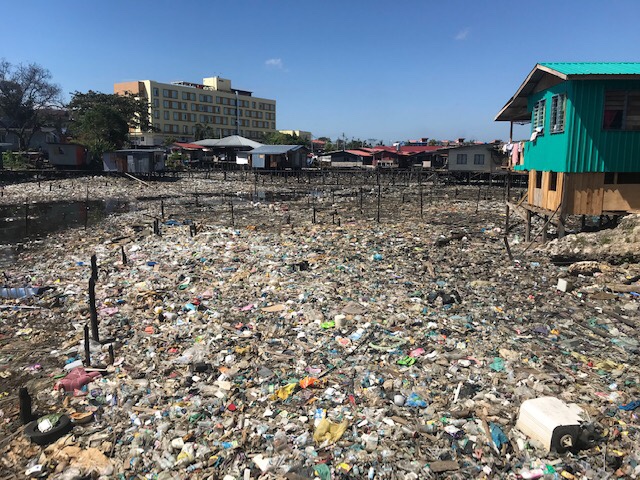
Overall it was a pretty uneventful day, but some of the sights there were extremely eye opening. Semporna is insanely poor, and I’ve ever visited an area like it before. There are layers and layers of trash that cover the water and streets there unlike I’ve ever seen.

Some sights that stand out:

– a woman laying in the road with two toddlers around her, holding a baby that looked to be no more than two weeks old

– pregnant and starving dogs and puppies digging through trash filled water for food

– boys no older than ten huffing gasoline and glue out of plastic bags

– unsupervised kids everywhere at all times of day- it was Thursday and none of these kids had parents around or were in school. A four year old carrying a two year old, groups of young boys running around alone, a barefoot three year old, no parents in sight

– homeless women laying across store openings asking for money

– preteen aged waiters and waitresses at every restaurant and cafe

This trip really put a lot into perspective for me. These people live thirty minutes by boat from where I am living, which is seemingly an island paradise, yet they will most likely never see it. These kids have no control over where they were born, yet they will likely never know how bad they have it. We spend our days on Pom Pom making small efforts in the sea, yet there is a whole mainland less than an hour away drowning in their own garbage. It makes you feel fortunate enough to have won the life lottery of being born into a country of opportunity and a family who provides for you, while also making it feel like your efforts are barely putting a dent into a global issue. As disturbing as a lot of today was, I’ll probably never forget it and hope that others get to experience seeing life so different from our normal day to day that we take for granted.

Getting Fit Island Style

Upon arriving to the island, I was spoiled in my first work with a yoga instructor who was here and would lead a class on the beach a few mornings a week. Unfortunately, she left two weeks ago and I’ve been left to figure out a fitness routine on my own.

With little to no actual gym equipment here, people are forced to get creative. Some people brought fitness bands, some do pull ups, others box against coconut trees. Below are some things I’ve worked into my routine, which aren’t the most conventional, but you gotta work with what you got.

-Run loops around the neighboring resort’s bicycle track. Just smile and wave and pretend you’re totally not coming over on to their property from the only camp on the island that is home to people other than Chinese tourists.

-Hammer artificial reefs into the sand. This is done about five meters underwater in full scuba gear and usually takes about an hour to hammer six cinderblocks into the sand as a foundation for artificial reefs.

-Shovel sand. Wheel barrows of sand are needed each week to use for the construction of the artificial reef blocks. Take a wheel barrow and fill it with sand, push it over to the designated area and repeat 8-10 times.

-Beach volleyball. If you’re really looking for a good burn, play against the locals and embarrass yourself as numerous tourists film you getting spiked in the face on their iPads.

-Do laundry. If you do it like I do, you’ll be wringing soap out of your clothes for at least 90 minutes. Great for the forearms.

Fingers crossed that some of these activities will make a dent in the 700 grams of carbs I’m eating in noodles and rice a day.

Crown of Thorns

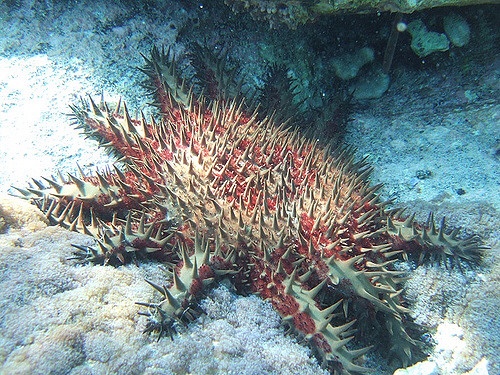
Yesterday’s activities were dedicated to the Crown of Thorns (aka COTS). COTs are sea stars that are natural predators to coral and get their name for their spiky venomous spines that cover their surface. One of TRACC’s main focuses recently has been removing COTs from coral surfaces, as they eat and destroy most coral and slow down growth of new coral.

We were put into groups of three and taken to an island about 10 minutes away by boat to search for and collect the COTs. I was assigned the role of basket holder, probably because I suck at finding things underwater, so my duties consisted of holding a plastic wicker basket and swimming over to people who found a COT To collect it.

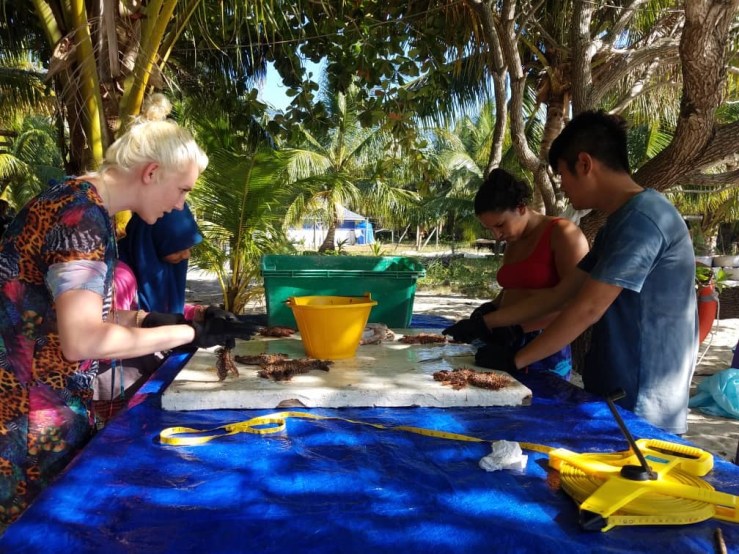
At the end of our hour dive, between three groups we had collected 48 COTs. We took these back to camp where they were analyzed for size and maturity. One of our science experts on the island performs a COT dissection once a month, where he records data about size and reproductive ability of each COT. We took part in this yesterday, and I have to say I haven’t dissected anything since middle school. With almost everyone in my group being vegetarian, they appeared to be pretty apprehensive, leading to someone calling me a savage after dissecting my seventh COT while everyone else had done two. I won’t apologize, I’m here to save the coral.

I was way more interested in this than I thought I would be, as I wouldn’t typically classify myself as a science person. For each COT, we would weigh it, measure the diameter, count the arms, and then dissect two arms and extract the eggs to decipher whether it was male or female, and then weigh the eggs to calculate what percentage of the COT was made up of eggs. This helps us to know how reproductive these sea stars are and whether they are reproducing at a rate that will overpower the rate at which coral is growing. Pretty interesting stuff.

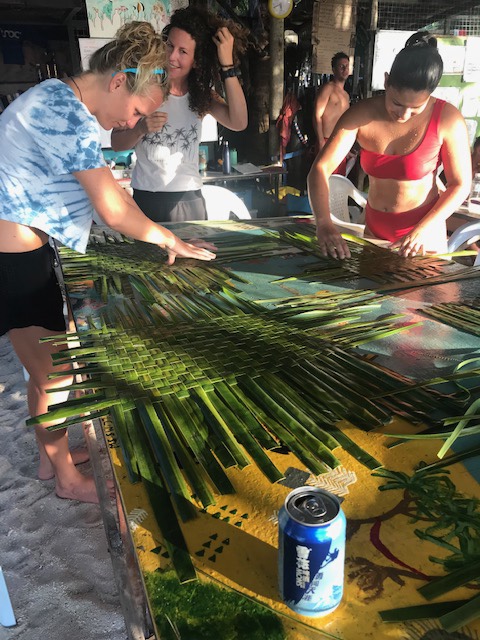
After this I honed another skill that will help me when I am eventually on Survivor, palm weaving. I made a floor mat to put outside of my tent and hopefully cut the amount of sand I track into my tent by at least half. With some cold beers and Jack Johnson playing, I couldn’t have felt more like an island cliché.

Today is Sunday Funday, where we have just one fun dive scheduled and the rest of the day is free time. It’s always funny to me when Sunday rolls around and people are so happy to have free time, yet our “work days” consist of scuba diving, volleyball, beach walks, beers and hanging out. I guess whatever environment you’re in, even if your schedule consists of some great activities, everyone wants a break from being told where to be and when. Happy Sunday 🍻

Living on Island Time

If you know my Dad, you’ll know that Cooneys were raised with an emphasis on being on time. Being on time means 15-20 minutes early regardless of what you are doing. Now you may not know this because I am the only Cooney child that abides by this rule, and because my Mom also does not follow this. But 2/5 family members isn’t bad, good attempt.

I cannot stand being late for something and don’t feel prepared unless I am where I need to be well before the assigned time. This is something I’ve had to adjust now that I’m living the #islandlife.

Each day a schedule is written up on a whiteboard here for everyone to see what activities they are involved in for the day. Whether it be a dive, project, chores, or a meal, I am sitting there 20 minutes before the activity occurs. I have come to realize that this time written on the board is actually more of a loose guideline rather than a start time. Class at 9am? You’ll find your teacher making himself breakfast at 9:15. Dive starts at 10:30? You’ll be in the water by noon. Beach clean up at 6pm? Your teammates with be cracking beers around then.

I’m really trying to be more go with the flow, but even when I pass my instructor just waking up in the morning as I’ve been sitting at the table for 15 minutes with my books I still can’t bring myself to show up late. “We can try again tomorrow because we chillin on island time”. Jeez I need to relax.

My New Hobby

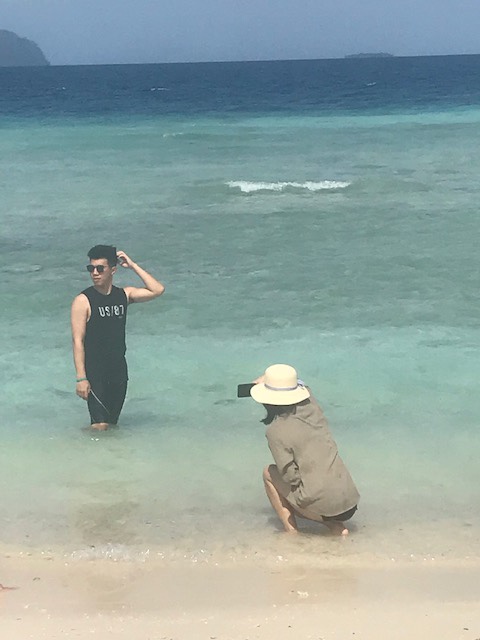
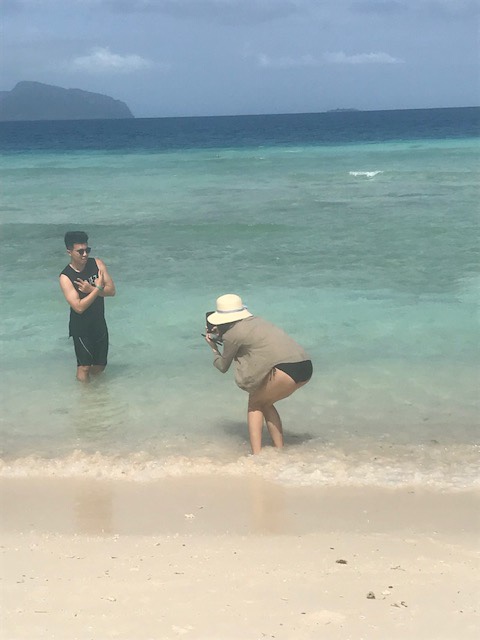
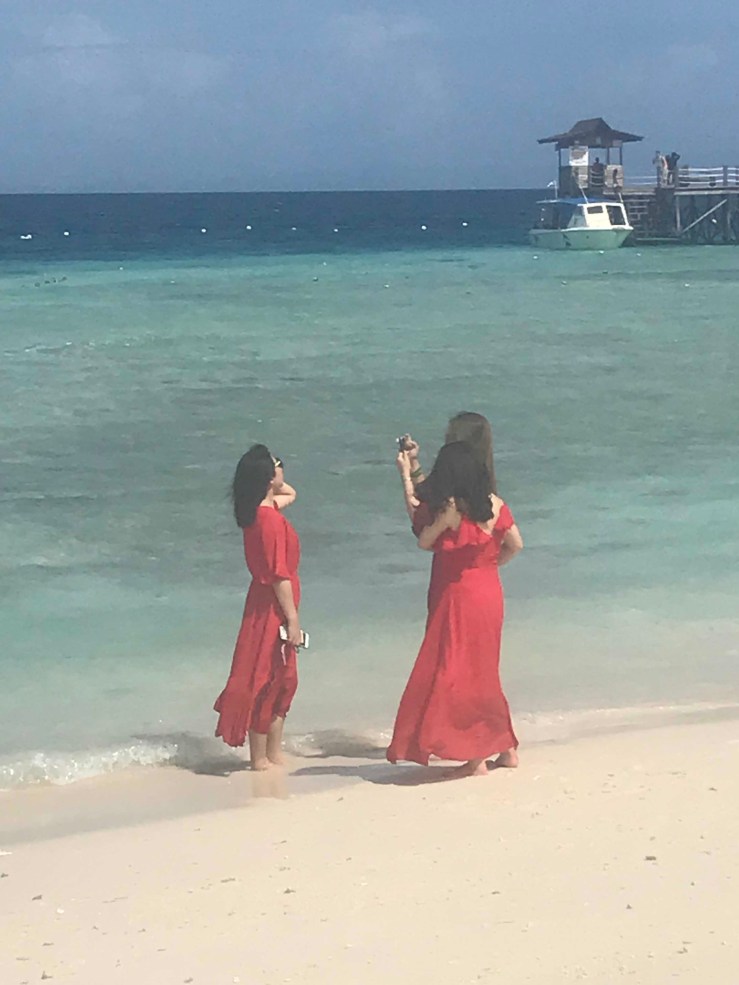
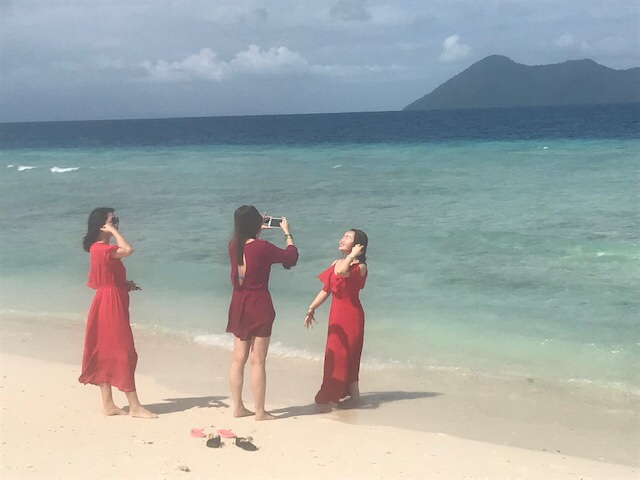
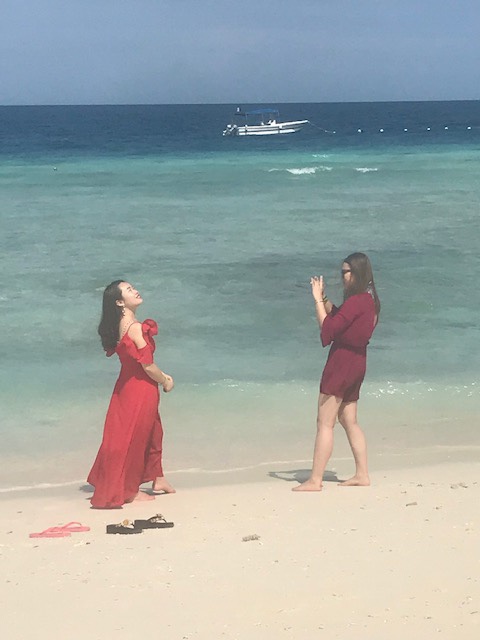
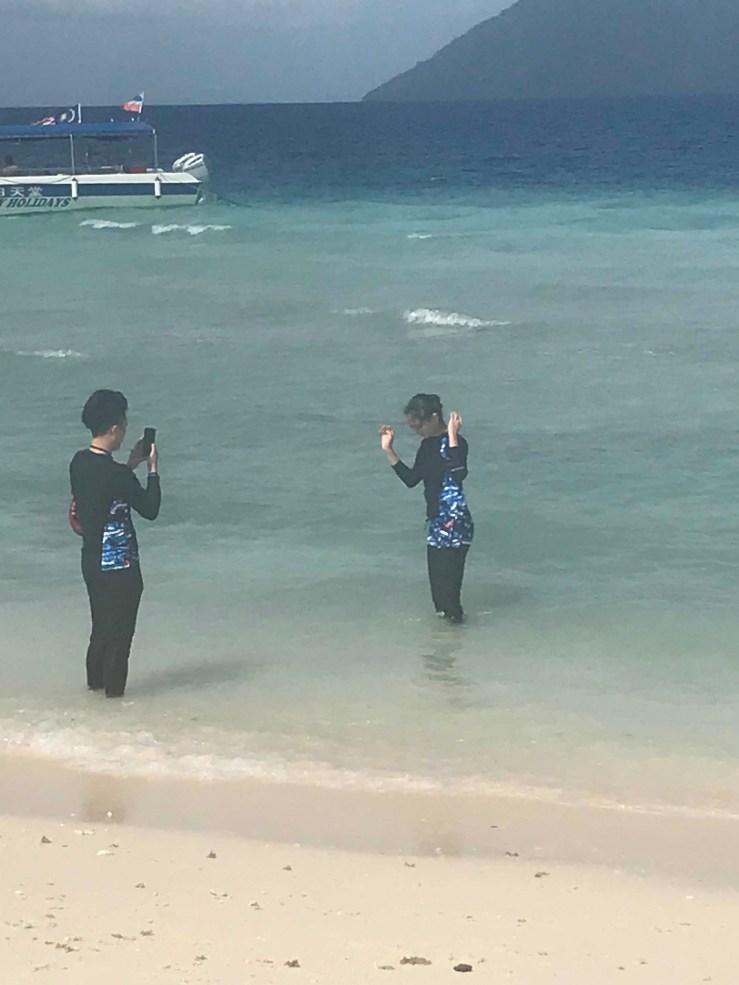
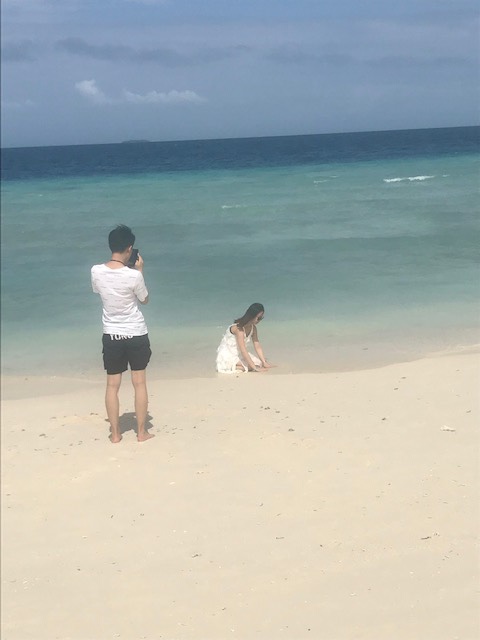
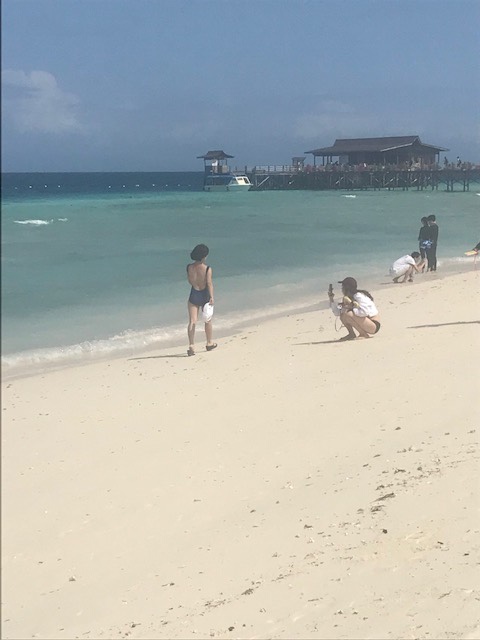
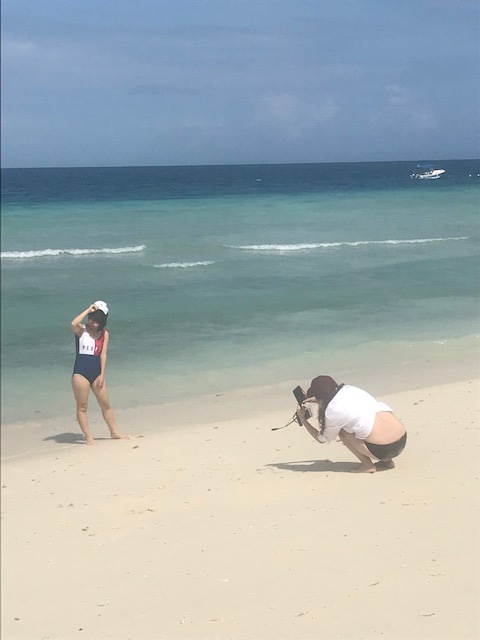
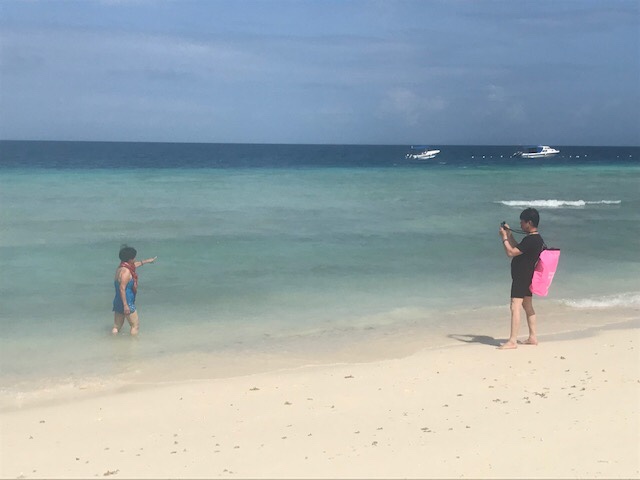
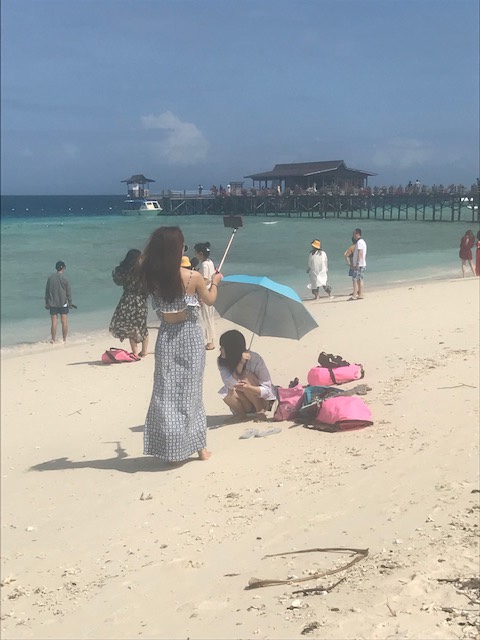
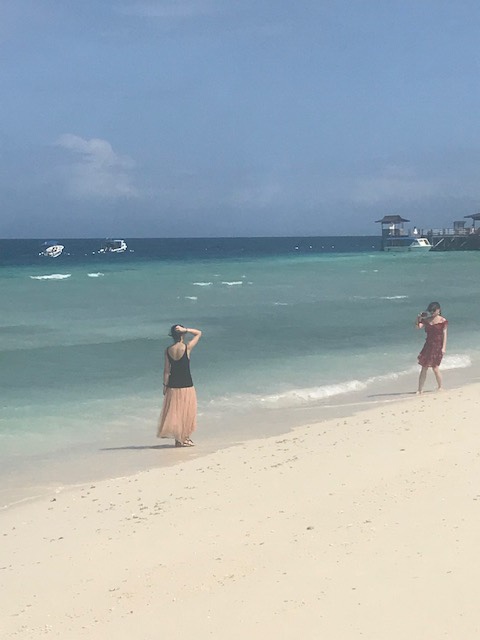
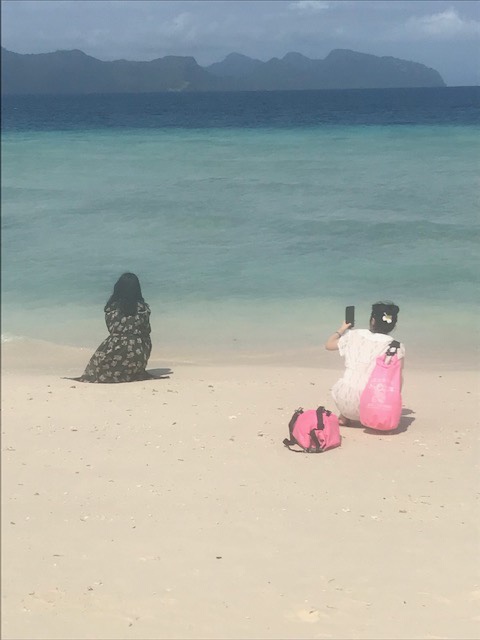
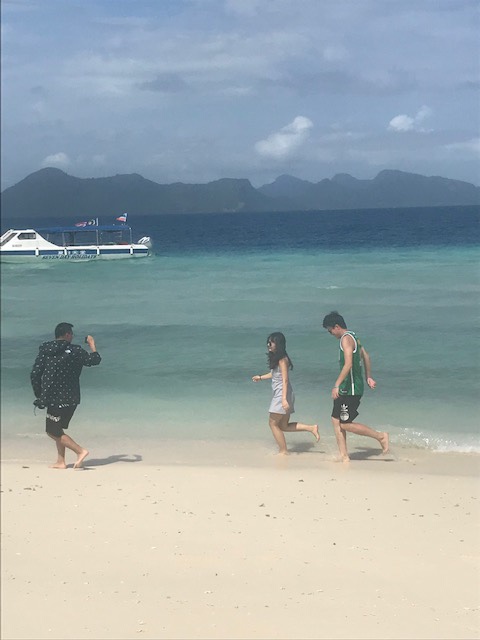
With having some time to kill during the days here on Pom Pom, I decided to pick up a hobby. You may think it’s palm weaving, or paddle boarding, or jewelry making, but it’s not… it’s Chinese tourist spotting.

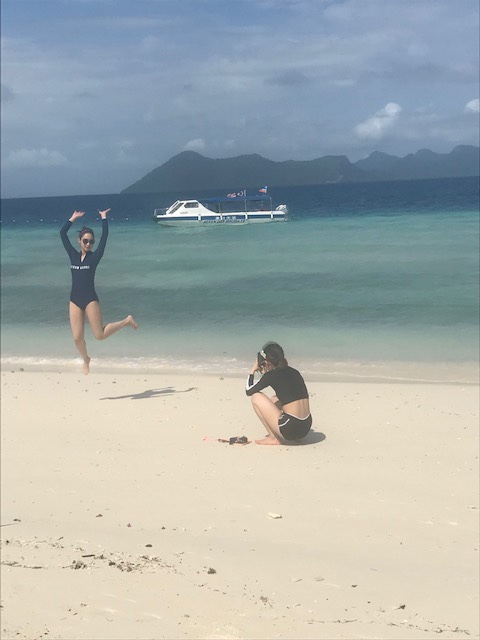
A few days a week there are boats that come from the mainland for day trips. With China being just a short plane ride away, these tourists are almost exclusively Chinese. What I have come to figure out is that their day trips on the island consist of not actually doing anything, but taking pictures and appearing like they are doing something. I’ve picked up a lot of tips from them-

Hit them with that island fresh look-

But also throw up your favorite gang sign-

Jumping photos are a must-

Have yourself a full-on photo shoot, no shame in that game-

Matching outfits are a plus-

Make sure you write your name in the sand-

Work your angles-

Point out your favorite spot-

When your friends are incompetent, use a selfie-stick-

Strike a pose-

Stare off into the distance and pretend that you don’t know the photo is being taken-

And run along the beach with a friend-

I hope these tips have inspired you to not live your best island life, but act like you’re living your best island life.

TRACC Food and Drink Guide

I’ve gotten a lot of questions about the food and drink situation here, so I wanted to map out my guide for eating and drinking your way through camp. We have two Malaysian women who cook our lunches and dinners each day on the island, while breakfast is up to us. After two and a half weeks here, I feel equipped to give my expert recommendations of the the islands cuisine.

Breakfast: My go to is a skillet scramble with eggs, potatoes, onion and of course, sambal. I just figured out how to make a coffee today, as my first few days I screwed up so badly that I’ve avoided it since. The coffee is instant, the milk is powdered, and the only other available add in is sugar. I think I perfected the proportions today with a half scoop of coffee, two scoops of powdered milk and probably too much sugar, but it was the best I’ve had. Other breakfast options include toast, peanut butter and jelly, oatmeal, and some kind of pancakes that I have also not figured out how to make.

Lunch: Always vegetarian, lunch options usually include white rice, lo mein noodles, some stir fried vegetables, a salad, fruit, tofu, or some form of egg. The lo mein noodles are amazing but I’m assuming they’re made with a can of oil or butter (especially clutch if you’ve had a few too many the night before and need something greasy). White rice is my new best friend and I think I’ve eaten it every day since being here. Once again, hit the sambal on everything. I typically bypass the tofu and egg at lunch, not a huge fan of tofu and don’t particularly enjoy eggs outside of breakfast hours (what a diva am I right?) To sum up lunch, if you looked at my plate you would assume I was carb loading to run the New York City Marathon, but nope just crushing a plate of noodles and rice at 11:30am after a morning of failing to correctly identify any fish.

Snacks: Options include bananas, peanut butter and jelly, more eggs, instant noodles, and whatever American snacks you’ve managed to ration since being here. There is a resort down the beach with a snack stand that we are able to purchase food from, and those options include some Asian form of Cheese Doodles, Pringles, Chips Ahoy, Magnum Ice Cream Bars, and ice pops. I think they’re starting to know me down there, as they see the only white girl within 50 feet approaching with bills in her hand and they unlock the ice cream freezer.

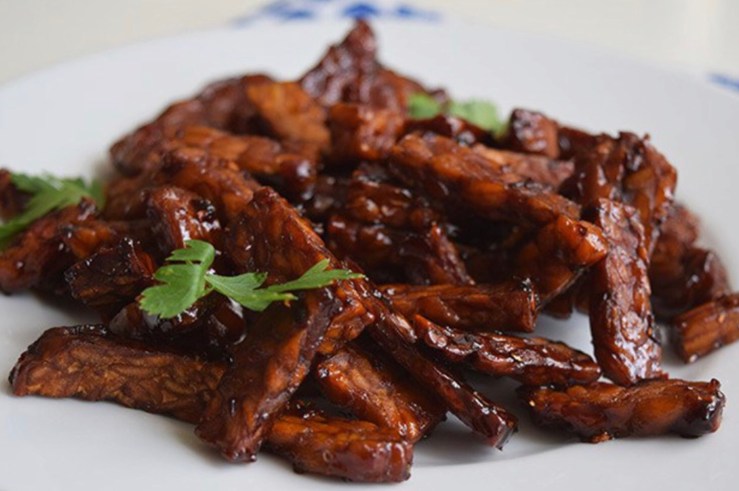
Dinner: Dinner meals are also vegetarian with a chicken dish being offered every other night. I’ve actually eaten almost completely vegetarian since being here since I’m not too fond of chicken on the bone, which is how it is always served (once again, island diva). Popular dinner dishes include potatoes, lentils, veggie burgers (which are amazing), salad, veggies, my best friend white rice, and my new favorite, tempeh. Tempeh is an Indonesian dish made from soybeans, usually chopped up and sautéed in sauce to be eaten over rice.

Drinks: Soft drinks, beer, and whiskey are available to purchase at camp. Soft drink offerings include Coke, Sprite, iced tea, iced coffee, 100 Plus (an isotonic carbonated sports drink), and Milo (a chocolate malt drink).

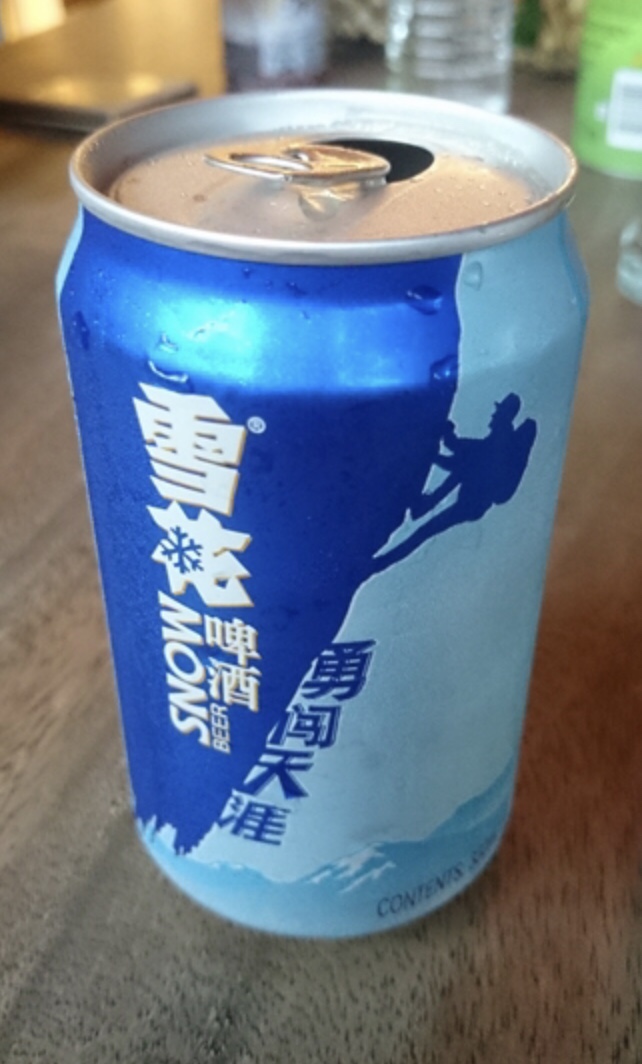
Beer consists of one option- a smooth, light, watery, refreshing, Keystone Light-esque lager that I think is called Snow? If you can tell from the description, it is comparable to your favorite beer from college that cost you $12 for a 30 rack. Pro- one can is $2. Con- you’ll probably need to drink 37 of them to catch a buzz.

Whiskey is an unknown brand with a red label that reads “+ or – 40% proof”. I am told this is because of the inconsistency in the distillation process, where people claim to try one bottle that tastes like a watery 20 proof, and then next time have another that knocks them out after a few sips. A game of whiskey roulette if you will. Pro: one bottle is $4.50. Con: you’ll either need a few sips or one and a half bottles, but you gotta drink to find out. I can’t say they don’t keep it interesting around here.

Well that’s the basic run down of food and drinks at camp. I haven’t had a meal I didn’t like, but I can say that my first few days back in the states will consist of pizza, ravioli, nachos… ya know all the American foods.

Turtle Walk

(Photo by @davideriaud)

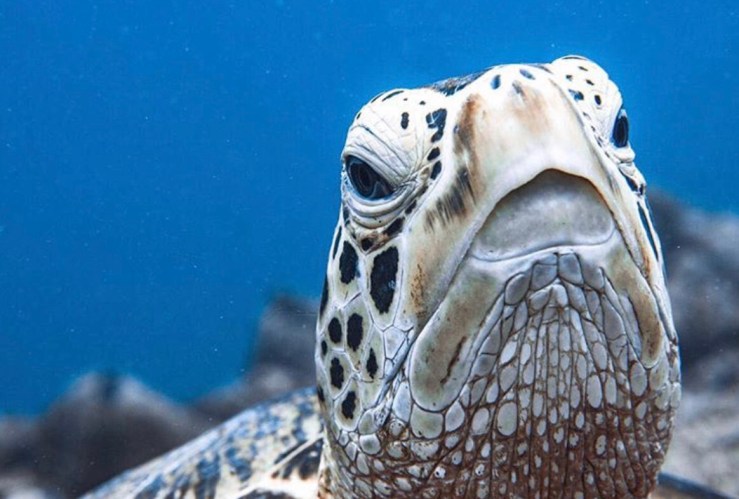
This weekend I was scheduled for my first turtle walk on Pom Pom. Each night at 11pm, a group of three walks a lap around the island in search of turtle tracks. Turtles lay their eggs at night, so doing the walk at this time is most likely to increase chances of finding eggs. If you see tracks on the beach, you search for the turtle and sit and wait as she lays her eggs. This can take quite a few hours, as she lays hundreds of eggs at once and buries them afterwards. Once she has returned to the sea, you notify a science officer back at camp, who then comes and collects the eggs to take to the turtle sanctuary on the island.

At first I felt bad about this, thinking “wait we’re just taking all of the mother turtle’s eggs from her spot in the sand?!” But I was told that turtles never return to the eggs, and once they lay them their job is done. We remove the eggs from the beach because there are poachers that visit the island and dig them up to sell them, as people actually purchase them for food. Though a turtle is found only every three to four weeks, we do the walk every night in the hope that we find the eggs first.

We didn’t find any tracks on my walk, as 107 eggs were found just a few nights before. The sanctuary notifies us when there will be a hatching, so I’m hoping to see one soon. Only one out of one thousand turtles makes it to adulthood, with portions of them never even touching the sea when they are released due to being eaten by birds and other animals. With these numbers in mind, I hope this small efforts gives a few more of those little guys a chance. Fin, noggin, duuuuude 🤘🏼